title

welcome to malaysia
Showing posts with label Terengganu. Show all posts

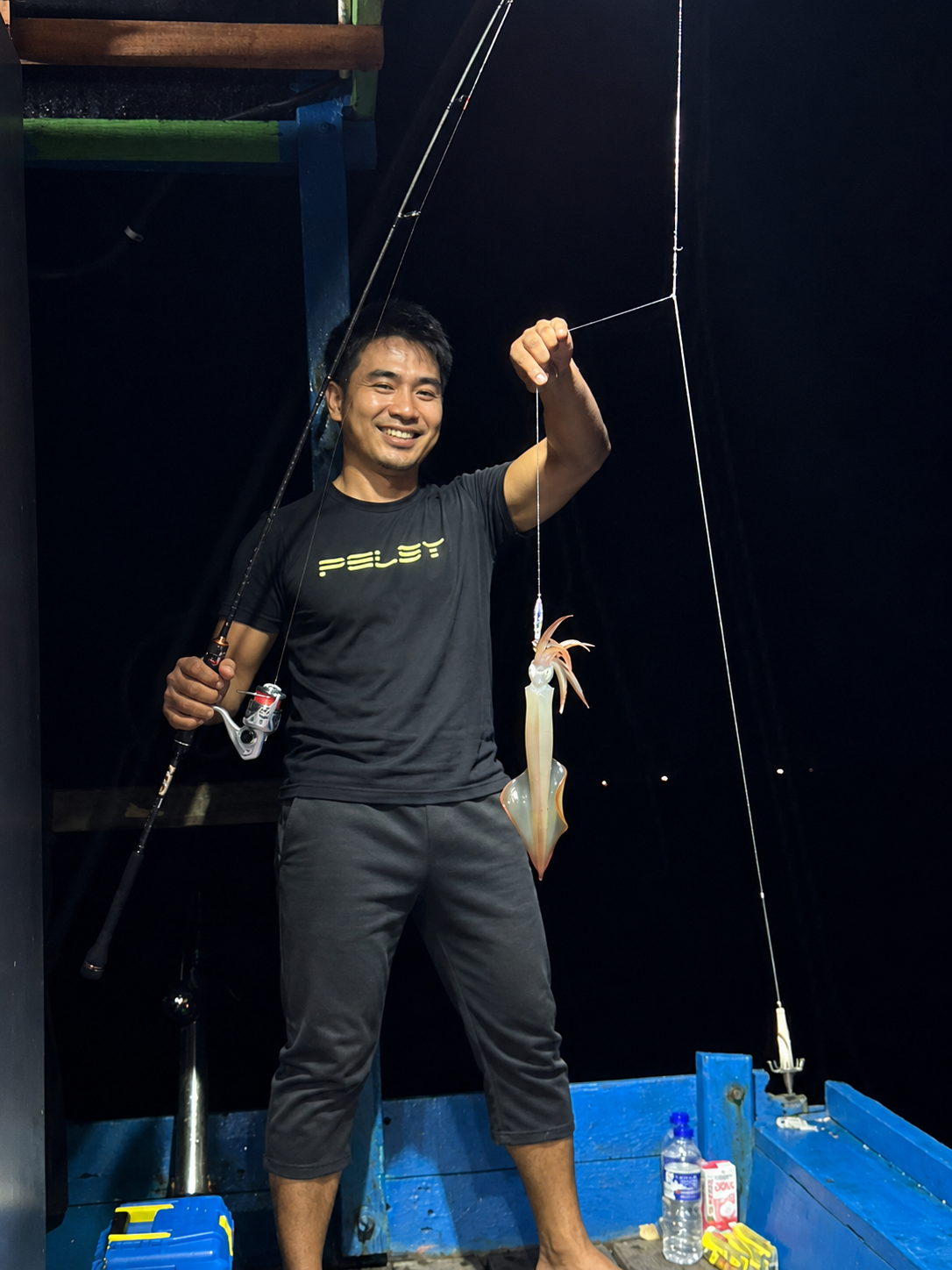
Squid Jigging in Kemaman, Terengganu: A Fun Night Out at Sea

Planning to try squid jigging in Kemaman, Terengganu? Here’s a casual guide on how to get there, what to bring, and what the night fishing experience feels like.

Squid Jigging (Mencandat Sotong) in Kemaman, Terengganu

Some travel experiences stay with you not because they are fancy, but because they feel real. Squid jigging in Kemaman, Terengganu is one of them.

It is simple, a little unpredictable, and honestly quite fun — especially if you enjoy the sea, night breeze, and trying something different from the usual beach holiday.

In Kemaman, squid jigging is not just about catching squid. It is about heading out with a local boatman, waiting under the night sky, laughing when someone gets sprayed with squid ink, and feeling that small excitement when your line suddenly gets heavier.

Even if you come back with only a few squid, the experience itself is already worth the trip.

Where Is Kemaman?

Kemaman is located in the southern part of Terengganu, close to the Pahang border. If you are coming from Kuantan or Cherating, it is an easy drive up the coast.

The main town is Chukai, and around Kemaman you will find fishing villages, coastal areas, seafood restaurants, and quiet seaside spots. It is not as busy as some tourist towns, which is part of its charm.

Most squid jigging trips usually start from a local jetty or fishing village. The exact meeting point depends on the boat operator, so make sure you confirm the location before your trip.

How to Get to Kemaman

From Kuala Lumpur

If you are driving from Kuala Lumpur, the usual route is through the East Coast Expressway towards Kuantan, then continue to Kemaman.

A simple route would be:

Kuala Lumpur → Karak → East Coast Expressway → Kuantan → Cherating → Kemaman

The journey can take a few hours, depending on traffic and how many times you stop along the way. It is a nice road trip if you enjoy driving towards the East Coast.

Try to leave early so you do not feel rushed. If your squid jigging trip starts in the evening, it is better to arrive in Kemaman with enough time to check in, rest, eat, and get ready.

From Kuantan or Cherating

Kemaman is very convenient if you are already in Kuantan or Cherating.

You can spend the day around Cherating, enjoy the beach or grab something to eat, then continue to Kemaman for the squid jigging trip at night.

A nice short itinerary could look like this:

Kuantan → Cherating → Kemaman → Kijal

This makes the trip feel more relaxed instead of driving all the way just for one activity.

By Bus

If you are not driving, you can take an express bus to Kemaman or Chukai. From there, use local transport, taxi, or e-hailing to reach your accommodation or meeting point.

Just make sure your arrival time matches the trip schedule. Squid jigging trips usually begin in the evening, so arriving too late can be stressful.

When Is the Best Time to Go Squid Jigging?

Squid jigging in Terengganu is seasonal. It usually happens during the calmer months, when the sea conditions are better, and squid are more active.

Many locals and operators recommend the season from March to August, but the exact timing can vary depending on weather and sea conditions.

Before booking, check with the boat operator. Ask them whether it is a good time to go, whether the sea is calm, and what happens if the weather turns bad.

The sea can be unpredictable, so it is always better to listen to the locals.
What to Bring for Squid Jigging

You do not need to buy a lot of expensive fishing gear, especially if this is your first time. Most operators will provide the basic equipment.

Still, there are a few things that can make your night more comfortable.

1. Squid Jig

The main tool is called a squid jig, or candat in Malay. It looks like a small colourful lure with hooks at the bottom.

Some are bright, some glow in the dark, and some are designed to move nicely in the water. The idea is to attract squid so they grab onto it.

If you are a beginner, just use what the operator provides. No need to overthink it.

2. Fishing Line or Light Rod

Some trips use a handline, while others may use a light rod. A handline is simple and easy enough for beginners.

You lower the jig into the water, wait a bit, then move it up and down gently. That is basically the rhythm.

It sounds easy, but when you are actually on the boat, trying to feel whether something is pulling your line, it becomes surprisingly exciting.

3. Comfortable Clothes

Wear something light and comfortable. You might get wet, especially if the sea is a little choppy or if a squid decides to spray ink at the wrong moment.

Bring:

  • A light jacket
  • Extra clothes
  • Small towel
  • Slippers or rubber shoes
  • Waterproof bag
  • Plastic bag for wet clothes
  • Cap or head cover

It can get breezy at night, so a jacket is always a good idea.

4. Seasickness Medicine

This one is important. If you are not used to being on a boat, take seasickness medicine before the trip.

Do not wait until you are already feeling dizzy. Once the boat is out at sea, there is not much you can do except sit quietly and regret your life choices.

Take it early and enjoy the trip properly.

5. Snacks and Drinking Water

Some boat packages include food and drinks, but it is still smart to bring your own water and light snacks.

You may be out at sea for a few hours, and the night can feel longer when you are hungry.

What the Experience Feels Like

The trip usually starts in the late afternoon or evening. Everyone gathers at the jetty, the boatman gives a short briefing, and then you put on your life jacket before getting on the boat.

At first, everything feels calm. The boat moves away from shore, the sky slowly changes colour, and the lights from land begin to look smaller.

This is one of the nicest parts of the trip. The wind, the sea, the sunset — it feels peaceful.

Then, once the boat reaches the squid jigging spot, the lights are turned on. Everyone finds a place by the side of the boat and lowers their jig into the water.

For the first few minutes, you may not feel anything.

You wait.

You lift the line a little.

You drop it again.

You wonder if you are doing it wrong.

Then suddenly, the line feels slightly heavier.

Not a strong pull like a big fish. More like something is hanging onto it.

You slowly pull it up, and there it is — your first squid under the boat lights.

That small moment is what makes the whole trip fun.

The Funny Part: Squid Ink

One thing you should know: squid can spray ink.

Sometimes it happens when you pull them up. Sometimes it happens when you least expect it. And sometimes, unfortunately, it happens directly at someone’s shirt.

But that is part of the fun.

You will probably hear people laughing, shouting, and teasing each other on the boat. It becomes less like a serious fishing trip and more like a shared night adventure.

So do not wear your nicest outfit.

Simple Technique for Beginners

You do not need to be a fishing expert to enjoy squid jigging.

Here is the basic idea:

Lower the squid jig into the water and let it sink. Then gently lift and drop the line. Keep doing it slowly. If you feel the line getting heavier, pull it up steadily.

That is it.

A few beginner tips:

  • Do not pull too hard.
  • Keep your movement smooth.
  • Ask the boatman if you are unsure.
  • Try different depths if nothing happens.
  • Stay calm when you catch one.
  • Keep your face away when the squid comes up.

The boatman usually knows where the squid are. So if he tells you to try a certain side of the boat, listen to him.

Is It Suitable for Beginners?

Yes, definitely.

Squid jigging is suitable for beginners, as long as you are comfortable being on a boat at night. You do not need fishing experience.

It can also be fun for families, groups of friends, couples, or even solo travellers who want to try something local.

However, if you are bringing children, check with the operator first. Ask about the boat size, trip duration, safety equipment, and sea conditions.

Why Try Squid Jigging in Kemaman?

Kemaman has a slower, more local feel compared to busier tourist destinations. That makes the experience feel more personal.

You are not just joining a polished tourist attraction. You are getting a small taste of local coastal life — the kind of activity that people here have known for years.

You also get to see a different side of Terengganu. Not just beaches, resorts and seafood restaurants, but the quiet excitement of being at sea after dark.

Some nights, you may catch a lot. Some nights, maybe only a few. But that is how the sea works.

And honestly, that is part of the charm.

Tips Before Booking Your Trip

Before you book, ask the operator a few simple questions:

  • Where is the meeting point?
  • What time does the boat leave?
  • How long is the trip?
  • Is the equipment included?
  • Are life jackets provided?
  • How many people will be on the boat?
  • Is food or drink included?
  • What happens if the weather is bad?
  • Is the trip suitable for beginners or children?

Do not just choose the cheapest option. Choose someone who communicates clearly and takes safety seriously.

What Else to Do Around Kemaman

Since you are already in Kemaman, try to spend a bit more time around the area.

You can:

  • Eat sata and otak-otak.
  • Explore Chukai town.
  • Look for local seafood restaurants.
  • Visit nearby beaches around Kijal.
  • Continue your trip to Cherating.
  • Stay overnight and enjoy a slower East Coast getaway.

If you are coming from Kuala Lumpur, a 2-day 1-night trip is possible, but 3 days 2 nights will feel much more comfortable.

Final Thoughts

Squid jigging in Kemaman is not a luxury activity, and that is exactly why it is special.

It is simple, local, and full of little moments — the boat ride, the sea breeze, the waiting, the first catch, the laughter when someone gets sprayed with ink.

You may not come back with a huge bucket of squid, but you will come back with a good story.

And sometimes, that is the best kind of travel experience.

Discover the Hidden Waterfalls of Taman Negara National Park: A Practical Guide for Curious Traveler

Taman Negara is one of those places that sounds simple when someone describes it.

Rainforest. River. Trails. Boats. Wildlife. Done.

Then you actually arrive in Kuala Tahan, hear the jungle getting louder as the sky gets darker, watch the longboats crossing the river, and suddenly it feels bigger than that. Older. Wetter. Wilder. A bit less predictable too, which is honestly part of the charm.

Most visitors come here for the canopy walkway, jungle trekking, night walks, and river trips. All good choices. But if you want a slightly more adventurous day out, you should try to Discover the Hidden Waterfalls of Taman Negara National Park.

Now, quick honesty check. The waterfalls here aren’t huge dramatic drops like the ones you see on glossy travel posters. They’re more like jungle cascades, rocky river sections, natural pools, and fast-moving water tucked inside the forest. The main waterfall-style spot most travelers visit from Kuala Tahan is Lata Berkoh, and getting there is half the experience.

You’ll probably get wet. Your shoes may suffer. Your hair won’t behave. And if you’re anything like me, you’ll tell yourself you’re “just going to sit near the water” before eventually stepping in anyway.

Worth it? I think so.

What Are the Hidden Waterfalls in Taman Negara Really Like?

When people talk about waterfalls in Taman Negara, they’re usually talking about Lata Berkoh.

It’s not a tall waterfall crashing from a cliff. It’s a stretch of river with boulders, cascades, pools, and jungle all around. The water moves through rocks in layers, creating that rushing sound that makes you want to sit down and stay longer than planned.

What I liked most was that it didn’t feel overly polished. No fancy platforms. No café next to the water. No loud tourist setup. Just river, rocks, trees, and the kind of humidity that makes your shirt stick to your back after five minutes.

That’s Taman Negara.

A bit raw. A bit inconvenient. Very memorable.

The honest pros and cons

Pros:

  • The boat ride itself feels adventurous.
  • The waterfall area feels natural, not overly commercial.
  • It’s a good half-day trip from Kuala Tahan.
  • You get that proper “I’m in the rainforest” feeling.
  • It’s great if you like slow nature experiences rather than crowded attractions.

Cons:

  • It can be slippery and muddy.
  • The water level depends on recent rain.
  • It’s not ideal if you expect a huge waterfall.
  • Boat prices can feel expensive if you’re traveling solo.
  • Leeches may appear after wet weather. Not fun, but manageable.

How to Get to Taman Negara

Most travelers stay in Kuala Tahan, the main gateway village for Taman Negara in Pahang. From the village, you cross the river to reach the national park entrance.

Kuala Tahan itself is small and practical. Don’t expect a polished resort town. You’ll find guesthouses, floating restaurants, small shops, tour counters, and boatmen waiting by the river. It has a slow rhythm, which I actually liked after coming from the city.

From Kuala Lumpur

You have a few options, depending on your travel style.

1. Tourist shuttle or transfer

This is the easiest choice if you don’t want to deal with connections. Many operators offer van or bus transfers from Kuala Lumpur to Kuala Tahan.

It’s not glamorous, but it’s practical. If this is your first time visiting Taman Negara, I’d honestly choose this unless you really enjoy figuring out rural transport.

Beginner frustration: pickup times can feel a little vague, and transfers may include waiting around. Bring snacks and don’t schedule anything too tight on arrival day.

2. Self-drive

Driving gives you more freedom, especially if you’re traveling with friends or family. The road trip takes several hours, so don’t plan a packed itinerary on arrival day.

One small tip: arrive before dark if you can. It’s easier to find your guesthouse, sort out food, and get your bearings while there’s still daylight. Roads near rural areas can feel tiring at night, especially after a long drive.

3. Bus or train to Jerantut, then transfer

Jerantut is the common transport town before Kuala Tahan. From there, you can continue by local transfer, taxi, or arranged transport.

This can save money, but it takes more patience. Schedules may not line up perfectly, and that waiting-around time can get annoying if you’re carrying bags.

If you’re on a tight budget, this route makes sense. If you’re short on time, maybe not.

4. Boat from Kuala Tembeling

This is the classic slow route. It takes longer, but it feels more like an adventure. You travel by river before even reaching the park area.

If you’re not rushing, this is a nice way to ease into the jungle mood. Just know that sitting on a boat for a long time can get uncomfortable, especially if it’s hot or you’re stuck with your backpack between your knees.

How to Visit Lata Berkoh Waterfall

To visit Lata Berkoh, you’ll usually arrange a longboat from Kuala Tahan. Most guesthouses, tour counters, or boat operators can help with this.

The trip normally involves:

  • A longboat ride upriver
  • A short walk near the river
  • Time at the cascades or natural pools
  • Boat ride back to Kuala Tahan

The boat ride is the best part for many people. You sit low to the water while the rainforest rises on both sides. Sometimes the river is calm. Sometimes the boat has to slow down because of rocks or shallow sections.

It feels simple, but not boring.

The final walk isn’t usually long, but don’t underestimate it. Jungle trails have their own personality. Mud, roots, wet rocks, and surprise slippery patches are all part of the package.

The annoying part is when someone says, “It’s just a short walk,” and you turn up in smooth sandals with zero grip.

Don’t be that person.

Best Time to Visit the Waterfalls

The better time to visit Taman Negara is usually during the drier months, roughly March to September. Rain can still happen because, well, it’s a rainforest. But trails and river trips are generally easier during this period.

For Lata Berkoh, go in the morning if possible.

Morning is better because:

  • It’s cooler.
  • You have more time if the weather changes.
  • The river area feels calmer.
  • You can enjoy the place without rushing.
  • Light is usually better for photos.

Avoid planning the trip too late in the day. Rain can arrive quickly, and slippery rocks are not fun when you’re trying to hurry back.

Slight uncertainty here: conditions can change from one week to another, especially after heavy rain. Ask your guesthouse or boat operator before booking. Locals usually know whether the river is behaving or not.

How Much Time Do You Need?

For Taman Negara, I’d suggest at least 2 nights.

You can technically rush it, but you’ll miss the feeling of the place. Taman Negara is not just a quick photo stop. It’s better when you slow down a little.

For Lata Berkoh itself, set aside around half a day.

A simple itinerary could look like this:

Day 1: Arrive in Kuala Tahan

  • Check into your accommodation
  • Walk around the village
  • Eat at the floating restaurants
  • Book your activities
  • Do a night walk if you still have energy

Realistically, you may arrive tired. I wouldn’t force a full night activity unless you still feel fresh. Sometimes the better choice is dinner, a shower, and sleep.

Day 2: Lata Berkoh and River Time

  • Take a morning boat to Lata Berkoh
  • Swim or relax by the cascades
  • Return for lunch
  • Rest in the afternoon
  • Enjoy a slow dinner by the river

This is a good day. Not too packed, not too lazy.

Day 3: Canopy Walkway or Bukit Teresek

  • Do the canopy walkway
  • Try a short jungle trail
  • Leave in the afternoon, or stay longer if you’re enjoying the slower pace

If you like nature, three days feels much better than two.

What to Eat in Kuala Tahan

Food in Kuala Tahan is simple. Don’t expect trendy cafés or fancy restaurants everywhere.

Most people eat at local stalls, small restaurants, or the floating restaurants by the river. After a sweaty day outside, even a basic plate of fried rice can taste strangely satisfying.

Common food you’ll find includes:

  • Nasi goreng kampung
  • Mee goreng
  • Fried rice with egg or chicken
  • Chicken rice
  • Fried noodles
  • Simple fish dishes
  • Roti canai in the morning
  • Teh tarik
  • Iced Milo

What locals actually eat is usually practical and filling: rice, noodles, eggs, chicken, fish, and hot drinks.

My advice? Keep expectations realistic. The food is more “good enough after trekking” than “foodie destination.” Bring snacks if you’re picky or if you need something between meals.

Food Tip Before Visiting Lata Berkoh

Eat before your boat trip or pack something small.

Good snacks to bring:

  • Bananas
  • Buns
  • Biscuits
  • Nuts
  • Small chocolate bar
  • Water or isotonic drink

There’s nothing worse than being wet, tired, and hungry while waiting for the boat back.

Actually, mosquitoes might be worse.

Hidden Gems and Lesser-Known Tips

The Boat Ride Is Not Just Transport

Don’t treat the boat ride as dead time. It’s one of the nicest parts of the whole trip.

You’ll pass thick forest, quiet river corners, and stretches where the jungle feels very close. If you’re lucky, your boatman may point out wildlife or interesting river spots.

Sit back and enjoy it. Put the phone down for a few minutes.

Ask About Smaller River Stops

Depending on water levels and your guide, there may be calmer spots along the river where you can stop briefly. Don’t wander off alone or assume every pool is safe.

Ask first. Locals understand the river better than visitors do.

The Best Photos Are Not Always at the Main Spot

Most people crowd around the most obvious cascade. Walk carefully and look around. Sometimes the better shots are slightly away from the main group: tree roots over water, sunlight on wet rocks, quiet pools, or your boat waiting by the riverbank.

Just don’t risk your ankles for a photo. Seriously.

Watch the Rocks

Wet jungle rocks are sneaky.

They look fine, then suddenly your foot slides and your dignity disappears. Take your time. Use your hands if needed. Nobody looks elegant at a waterfall anyway.

Don’t Ignore the Quiet Moments

One of my favourite parts of trips like this is usually not the “main attraction.” It’s sitting on a rock, hearing the water, and realizing nobody needs anything from you for a few minutes.

That’s rare. Enjoy it.

What to Pack for the Waterfall Trip

Pack light, but pack properly.

Bring:

  • Waterproof bag or dry bag
  • Phone waterproof pouch
  • Quick-dry clothes
  • Towel
  • Change of clothes
  • Water bottle
  • Insect repellent
  • Sunscreen
  • Snacks
  • Grippy sandals or trail shoes
  • Plastic bag for wet clothes
  • Small first aid kit
  • Cash

Avoid bringing:

  • Heavy jeans
  • Expensive shoes
  • Too many valuables
  • Big bags
  • Strong perfume
  • Non-waterproof electronics

A sarong is surprisingly useful. You can sit on it, dry yourself, cover up, or use it when changing.

Beginner tip: pack your change of clothes in a separate plastic bag inside your dry bag. It sounds obvious, but plenty of people learn this after everything becomes damp.

Dress Code and Local Customs

Kuala Tahan is a small local village, not a beach resort. Dress comfortably, but respectfully.

For the waterfall:

  • Quick-dry shirts and shorts are fine.
  • Modest swimwear is better.
  • Cover up when you’re back in the village.
  • Don’t walk around shirtless in local food areas.
  • Keep noise low in nature areas.
  • Be polite with guides and boatmen.

One thing many tourists forget: local boatmen are not just “drivers.” They know the river, the weather, and the safe spots. If they say don’t swim somewhere, don’t argue.

Safety Tips for Waterfall Trips in Taman Negara

Taman Negara is beautiful, but it’s still wild rainforest. Be sensible.

Keep these in mind:

  • Don’t swim if the current looks strong.
  • Avoid waterfall areas after heavy rain.
  • Watch children closely near the water.
  • Don’t climb wet rocks for photos.
  • Stay with your group.
  • Use trusted boat operators or guides.
  • Keep your belongings dry.
  • Bring cash for fees and small expenses.
  • Check conditions before booking the trip.

Leeches can appear, especially after rain. They’re annoying, not usually dangerous. Still, wear proper socks or leech socks if you’re worried.

And yes, someone in the group may panic over the first leech. Happens all the time.

Realistic Budget Expectations

Taman Negara can be done on a modest budget, but costs depend on how you travel.

Expect to spend on:

  • Accommodation
  • Meals
  • Park permits
  • Boat transfers
  • Guided activities
  • Transport to and from Kuala Tahan

Budget travelers can save money by staying in simple guesthouses, eating local food, and sharing boat trips with others.

If you prefer comfort, budget more for private transfers, better accommodation, and private tours.

The Lata Berkoh boat trip is usually more affordable when shared. If you’re traveling solo, ask around your guesthouse or tour counter to see if anyone else wants to join. This is also a decent way to meet other travelers, assuming you don’t mind small talk before coffee.

Common Tourist Mistakes to Avoid

Wearing the Wrong Shoes

Flip-flops are okay around the village. They’re not great on wet rocks.

Bring footwear with grip.

Trying to Do Too Much

Taman Negara rewards slower travel. If you cram canopy walkway, trekking, night walk, waterfall trip, village visit, and river activities into one day, you’ll just end up tired and sweaty.

And probably slightly irritated.

Forgetting Cash

Not every small place is card-friendly. Bring enough cash before arriving.

Ignoring the Weather

Rain changes everything here. Trails get muddy. Rocks get slippery. Rivers can become stronger. Always check with locals before heading out.

Expecting Luxury Everywhere

Kuala Tahan has guesthouses and tourist facilities, but it’s still a small gateway village. Things can be basic. Service can be slow. Wi-Fi may not always behave.

Come with the right expectations and you’ll enjoy it more.

Not Asking Questions Before Booking

Ask what’s included in the boat trip. Ask how long it takes. Ask whether you need to bring food. Ask if the price is per boat or per person.

It saves awkward surprises later.

Is It Worth Visiting the Hidden Waterfalls of Taman Negara?

Yes, if you enjoy nature that feels real.

If you want a perfectly managed waterfall park with paved paths, lockers, cafés, and easy photo spots, Lata Berkoh may feel too rough around the edges.

But if you like boat rides, jungle sounds, cold river water, slippery rocks, and that satisfying feeling of being properly away from the city, then yes — it’s worth it.

To Discover the Hidden Waterfalls of Taman Negara National Park, don’t rush. Go early. Pack smart. Listen to your guide. Respect the river.

And accept that you may come back muddy, damp, and slightly tired.

Honestly, that’s probably the best way to experience it.

Discover the Hidden Gem of Perhentian Island: A Complete Travel Guide

Located off the coast of northeastern Malaysia, Perhentian Island is a tropical paradise that offers a serene and enchanting getaway from the hustle and bustle of city life. Comprising two main islands, Perhentian Besar and Perhentian Kecil, this island chain is a haven for beach lovers, snorkelers, and divers alike. In this comprehensive guide, we will take you through the essential information you need to know to plan your trip to Perhentian Island.

From its crystal-clear waters to its lush green forests, Perhentian Island is a nature lover's dream destination. The island is home to an incredible array of marine life, including turtles, rays, and colorful fish. The beaches are pristine and untouched, with powdery white sand and crystal-clear waters that are perfect for swimming, snorkeling, and sunbathing.

In this guide, we will cover everything you need to know to plan your trip to Perhentian Island, from getting there to getting around, and from accommodation to activities. Whether you're a seasoned traveler or a first-time visitor, this guide will provide you with all the information you need to make the most of your trip to this beautiful island.

Getting to Perhentian Island

The easiest way to get to Perhentian Island is by flying into Kuala Besut Airport, which is located on the mainland near the island. From there, you can take a ferry to the island. The ferry ride takes about 30 minutes and offers stunning views of the surrounding waters.

Alternatively, you can take a bus or taxi from Kuala Lumpur or other major cities in Malaysia to Kuala Besut, and then take a ferry to the island. The bus ride takes about 4-5 hours, depending on traffic conditions.

  • Ferry Schedule: The ferry schedule varies depending on the time of year and weather conditions. It's best to check with the ferry operator or a local tour operator for the latest schedule.
  • Ferry Cost: The cost of the ferry ride varies depending on the type of ferry and the time of year. On average, the cost is around RM 30-50 (USD 7-12) per person, one way.

Accommodation on Perhentian Island

Perhentian Island offers a wide range of accommodation options, from budget-friendly guesthouses to luxury resorts. The island is divided into two main areas: Long Beach and Coral Bay. Long Beach is the more developed area, with a wider range of accommodation options and amenities.

Coral Bay is a more secluded area, with a few luxury resorts and a more peaceful atmosphere. Both areas offer stunning views of the surrounding waters and are within walking distance to the beach.

  • Long Beach Accommodation: Long Beach offers a wide range of accommodation options, including guesthouses, chalets, and resorts. Prices vary depending on the type of accommodation and the time of year.
  • Coral Bay Accommodation: Coral Bay offers a few luxury resorts and a more peaceful atmosphere. Prices are generally higher than in Long Beach, but the views and amenities are worth it.

Things to Do on Perhentian Island

Perhentian Island offers a wide range of activities and attractions, including snorkeling, diving, swimming, and sunbathing. The island is also home to a few waterfalls and hiking trails, offering stunning views of the surrounding waters and forests.

The island is also a great spot for spotting marine life, including turtles, rays, and colorful fish. The waters are crystal-clear, making it easy to spot these creatures.

  • Snorkeling and Diving: Perhentian Island is a snorkeler's and diver's paradise, with crystal-clear waters and an incredible array of marine life.
  • Swimming and Sunbathing: The beaches on Perhentian Island are pristine and untouched, with powdery white sand and crystal-clear waters perfect for swimming and sunbathing.
  • Hiking and Waterfalls: The island offers a few hiking trails and waterfalls, offering stunning views of the surrounding waters and forests.

Pro-Tips and Notes

Make sure to book your accommodation and ferry tickets in advance, especially during peak season.
Bring sunscreen, a hat, and sunglasses to protect yourself from the sun.
Respect the local environment and marine life, and avoid touching or standing on coral reefs.

Conclusion

Perhentian Island is a tropical paradise that offers a serene and enchanting getaway from the hustle and bustle of city life. With its crystal-clear waters, pristine beaches, and lush green forests, the island is a nature lover's dream destination. Whether you're a seasoned traveler or a first-time visitor, this guide will provide you with all the information you need to make the most of your trip to this beautiful island.

So pack your bags, grab your sunscreen, and get ready to discover the hidden gem of Perhentian Island!

From elephant cemetery to tourist attraction

There is something mysteriously exciting about visiting an elephant burial ground. But doing so could cause an adverse environmental impact and ZALINA MOHD SOM wonders if it’s a good idea to trespass


Glide down the pristine Sungai Lebir on perahu pancong (or long boat)


Fermented fish (ikan pekasam) cottage industry at Kampung Renok Baru


The suspension bridge across Sungai Lebir at Taman Negara Kuala Koh

GASPING for breath and drenched in sweat and guilt, I looked around for a good excuse to be trespassing. After all, a burial ground is sacred, even if it’s one meant for the gentle giants — elephants.

What I found though, were two almost-complete sets of elephant skeletons, nicely arranged on the forest floor in a fenced up area measuring about three square metres.

All around was secondary forest and dense undergrowth near Kampung Star. The only visible path was the trail leading to the burial ground from the mouth of the walk-through Gua Pintu.

The skeletons were of elephants aged between 35 and 40 years old, which died about two years ago. The bones, found scattered about in the area by the Wildlife and Forestry Department, were moved to and arranged at their present site.

Chairman of the Persatuan Sahabat Sungai Nenggiri (Friends To Nenggiri River Association), Ahmad Karmizi Jalil, said the two elephants frequented the area towards the end of their lives.

Unfortunately, he said, they left a young calf that had been making regular visits to its parents’ resting place even though it was already a member of a herd of 20 elephants.

“Perhaps, it’s because of the strong family bond,” added Ahmad Karmizi who was leading a group of 40 Pressmen and travel agents to Gua Musang’s attractions.

That touching anecdote and the fact that there were about 100 visitors earlier, made me feel even more guilty about being there as by doing so, we may have “chased away” the young elephant and its herd.

There is no doubting though, the attraction of the elephants’ burial ground. To get there, one had to take a 15-minute boat ride on the rough Sungai Nenggiri and make a 45-minute trek that included a 15-minute caving adventure through Gua Pintu.

This gives visitors a taste of Gua Musang’s best – roughing it out at Sungai Nenggiri, a favourite with adventure seekers for rafting, caving and jungle trekking.

An excursion to the elephant burial site would be the cherry on top of this adrenalin cake, a unique tourism product. But at what expense?

I strongly recommend a thorough study to be done first on the environmental impact and the setting of guidelines on the number of visitors permitted in one day as well as dos and don’ts.

Fact Or Fiction?

Do elephant sacred burial grounds really exist? Two African-based websites dedicated to the pachyderm say “No”. Though both sites are based on African elephants, the logic behind their answers should apply to other species too.

With age, an elephant’s teeth start to wear out, forcing it to find softer forms of food. Older elephants often spend their last days in an area where such food is found and so die there.

This and the fact that the mammal is too large for its remains to be carried away by carnivores, is probably why elephants die in certain “designated” places.

And by chasing away predators and scavengers from the site, the animals helps propagate the “sacred burial site” belief. One of the sites concludes: “In reality, the elephants die like any other animal and are relished by the carnivores.”

Hotbed For Eco-adventure

Even without the elephant burial ground, Gua Musang is still tops on the country’s list of best eco-adventure spots.

There is always something to pump up the adrenaline – mountain or rock climbing, river rafting or tubing, wildlife spotting or fishing and caving, jungle trekking or off-roading, thanks to the rough waters of Sungai Nenggiri and the unique Taman Etnobotani.

For the unfamiliar, Sungai Nenggiri is known for rafting and shot to international fame through Nenggiri Challenge, an annual rafting race.

Race participants also walk through archaeological sites at caves — Cha, Chawan and Jaya — located along the river and then raft on a tributary that has been turned into a kelah (Malaya masheer) sanctuary.

On the other hand, the Etnobotani Park is a favourite jaunt for rock climbers with 30 climbing routes ranging from Grade 5B for beginners to 7A and 7B for experts. It also offers facilities for camping, team-building and recreational activities.

While these two and the beautiful peak of Gunung Stong are magnets for adventure seekers, Taman Negara Kuala Koh draws anglers.

As eco-adventure tourism normally attracts adventurous budget travellers, this biggest district in Kelantan has launched its homestay programme in a big way on top of its small bed and breakfast lodgings. Among these is the award-winning Kampung Renok Baru, some 20 minutes north of Gua Musang.

Taman Negara Kuala Koh

Gua Musang is the northern getaway to Taman Negara and the only official entry point in the State. Taman Negara Kuala Koh is part of the national park which covers an area of 4,343 sq kms and spans over the States of Kelantan, Pahang and Terengganu.

Like Taman Negara Kuala Tahan in Pahang, Kuala Koh is also situated at the confluence of two rivers – Sungai Lebir and Sungai Koh. Sg Lebir is the main river that joins Sungai Galas to form Sungai Kelantan at Kuala Krai.

Flowing down from the mountains of Tahan, Perlis, Penumpu and Gagau, these rivers have banks lined with giant trees like tualang and neram. The fruit of the neram is a favourite food of the kelah. This makes Kuala Koh a favoured fishing spot in the country.

Making it even more interesting is the fact that fishing is only a 10-minute boat ride upstream from the Kuala Koh park headquarters which houses the Taman Negara office, chalets and dormitories and a small café.

Another similarity it has with its elder sister Kuala Tahan is the newly-completed 300m-long canopy walk, 50m above the thick jungle floor. The highest platform on a tualang tree is 60m from the ground.

Kuala Tahan’s canopy walk holds the record of being the longest in the world at 510m long and 45m high.

Details, call Nik Nora of Taman Negara Kelantan at 012-965 4788 or Tourism Malaysia Kelantan office at 09-747 7554.

Village Experience

Whether you are travelling solo or in a group, the homestay at Kampung Renok Baru is a good choice. Besides family-oriented and cultural programmes, there is a fair share of kampung activities, from rubber tapping and palm oil harvesting to traditional games like sepak takraw, congkak, fishing or even cycling around the village.

Or go the extra mile and trek through the jungle to the nearby Pelangi Waterfalls. Hungry for more? Head for Taman Etnobotani, Sungai Nenggiri, aborigine settlements, Taman Negara Kuala Koh, Gunung Rabung or the highland resort of Cameron Highlands. Kampung Renok Baru is only 14kms from Gua Musang.

The best time for the homestay is during the fruit season as this is when the “new additions” to the family get a chance to pluck and eat fruit right off the trees in the orchards.

Details, call Kesedar Operation Office in Kampung Renok Baru at 09-912 6340 or Tourism Malaysia Kelantan office at 09-747 7554.

How To Get There

The town of Gua Musang is located in a territory bordered by Pahang in the south, Terengganu in the east, Perak in the west and Kelantanese districts of Kuala Krai and Jeli in the north.

Since the little town is on the Kota Baru-Gemas railway route, going there by train is probably the best and most interesting way. A train ride from Kuala Lumpur via Gemas would take around eight to nine hours.

By road, it’s three hours from Kota Baru and five hours from Kuala Lumpur. It is also linked to Cameron Highlands via the Simpang Pulai Highway. Express coaches and taxis are available from Kota Baru and Kuala Lumpur. There are regular flights to Kota Baru by Malaysia Airlines, AirAsia and Firefly as well.

ZALINA MOHD SOM (Pictures by FATHIL ASRI and ZALINA MOHD SOM)

Disclaimer : All photographs and articles appearing on this website are taken from the website of the hotel and resort. Copyright is on the hotel's website and the resort. We are not responsible for the information posted. We only help to promote tourism in Malaysia and also indirectly promoting the hotels and resorts in Malaysia.


Explore By State

View all